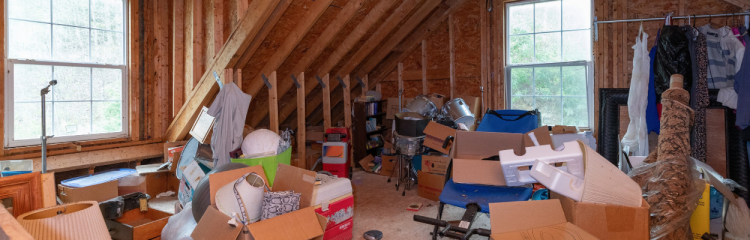
Attic Cleanout Checklist: How to Sort, Remove, and Reclaim Your Space
An attic cleanout is the process of sorting stored belongings, removing unwanted items, and clearing enough space to make the attic easier to access and more useful. Depending on the home, the job may involve old boxes, furniture, holiday decorations, clothing, broken household items, insulation debris, and belongings that have not been touched in years.
Attics are easy to fill with various items because they keep clutter out of sight. Over time, however, stored items can become difficult to reach, damaged by heat or moisture, or forgotten entirely. What begins as a few boxes can eventually turn into a crowded space that is difficult to inspect or safely move through.
A practical attic cleanout starts with a plan. Sorting first, protecting important belongings, and deciding how unwanted items will be removed can keep the project from becoming overwhelming.
At JUNKCO+, our attic cleanout services help homeowners handle the lifting, loading, and hauling once they are ready to clear the space.
Need help removing bulky or unwanted items from your attic?
Call JUNKCO+ to discuss the project, or find a JUNKCO+ location near you to get started:
Why attic cleanouts require careful planning
An attic is different from a garage, basement, or spare room because access is often limited. The entrance may be a narrow stairway, pull-down ladder, hallway opening, or small hatch. Roof angles, exposed framing, low ceilings, and weak flooring can also make it harder to move safely.
Heat is another concern. Attics can become uncomfortable during warmer parts of the day, especially when there is little ventilation. Dust, insulation, pests, sharp objects, and unstable stacks may also be present.
For these reasons, an attic cleanout should not begin by pulling everything out at once. It is usually better to work in sections, create clear sorting categories, and identify anything that may require special handling before removal begins.
A practical attic cleanout checklist
The following checklist can help you organize the job without turning the rest of the house into another storage area.
1. Check the attic before moving anything
Start with a careful visual inspection. Look at the entryway, flooring, lighting, ventilation, and the amount of room available to move.
Watch for signs of roof leaks, water damage, exposed nails, damaged boards, pests, mold-like growth, loose insulation, or unstable stacks. Do not enter areas that appear structurally unsafe.
This first inspection helps you determine whether the attic can be cleaned out normally or whether another professional should evaluate a repair, pest, electrical, or moisture issue first.
2. Choose a manageable work area
Avoid emptying the entire attic in one session. Divide the space into sections and work through one area at a time.
You might begin near the entrance and move toward the back, or divide the attic by item type, such as decorations, furniture, clothing, documents, and general household storage.
Working in sections keeps access routes clearer and reduces the chance of creating piles that block the exit.
3. Set up four sorting categories
A simple four-part system can make decisions easier:
Keep: Items you still use, need, or want to store.
Donate: Usable belongings that may be accepted by a local donation organization.
Remove: Broken, damaged, outdated, or unwanted items that are ready to leave the home.
Decide later: Items you are not prepared to make a decision about yet.
The “decide later” category can prevent the cleanout from stalling over one difficult box. Keep this group limited, label it clearly, and schedule another time to review it.
4. Protect important and sentimental belongings
Attics often contain family photos, records, keepsakes, collections, schoolwork, and inherited belongings. Set these items aside before the main removal work begins.
Paper, photographs, fabric, and electronics can be affected by heat, humidity, dust, and pests. Items you intend to keep may need to be cleaned, repacked, or moved to a more stable part of the home.
When several family members have belongings in the attic, confirm ownership before donating or removing anything.
5. Identify items that need special handling
Not everything stored in an attic should be placed into a general removal pile.
Paint, chemicals, fuel, batteries, fluorescent bulbs, medical waste, and other potentially hazardous materials may be subject to local disposal requirements. Electronics and certain appliances may also need separate recycling or disposal arrangements.
Do not assume every removal company or disposal facility accepts every material. Check local requirements and ask about restricted items before the appointment.
6. Clear a safe removal path
Before carrying boxes or furniture down from the attic, make sure the route is clear.
Remove tripping hazards from stairs, hallways, and the area around the attic entrance. Keep children and pets away from the work zone. Make sure doors can open fully and that there is enough room to turn larger items.
If furniture or bulky items must pass through narrow openings, measure the item and the access route before trying to move it.
7. Remove bulky items last
Large furniture, trunks, shelving, appliances, and heavy containers are usually easier to manage after smaller items have been sorted and removed.
Do not attempt to carry something down a ladder or narrow staircase if it cannot be handled safely. Awkward attic access can make even a moderately heavy item difficult to control.
This is often the point when professional home cleanout services become useful. Our local JUNKCO+ crew can handle approved items that require lifting, loading, and removal so homeowners do not have to navigate difficult access alone.
8. Clean and reorganize the remaining space
Once unwanted items are gone, sweep accessible flooring and remove loose packing material, empty containers, and general debris.
Before returning stored belongings, group similar items together and use clearly labeled containers. Frequently used items should stay near the entrance, while seasonal or rarely used belongings can be stored farther back.
Avoid creating stacks that block access, ventilation, electrical components, or areas that may need future inspection.
What to keep, donate, or remove from an attic
Some attic decisions are straightforward. Others depend on the condition of the item and whether it still serves a purpose.
Items worth keeping may include seasonal decorations, family records, useful tools, properly stored keepsakes, and household items you expect to use again. Keep only what can be stored safely and found without emptying the entire attic.
Donation items may include usable clothing, furniture, household goods, toys, and decorations. Acceptance depends on condition, local donation guidelines, and available organizations. Items that are stained, broken, incomplete, or damaged by moisture may not be suitable for donation.
Items ready for removal often include broken furniture, damaged boxes, outdated electronics, worn decorations, empty containers, old carpeting, and belongings that have not been used in years.
When you are unsure, ask whether the item is useful, replaceable, safe to store, and likely to be used again. Those questions can make the decision more practical and less emotional.
When an attic cleanout may be too large to handle alone
A small, organized attic with a few boxes may be manageable without outside help. A crowded attic with difficult access, heavy furniture, damaged materials, or years of accumulated belongings can be a different kind of project.
Professional help may make sense when:
- The attic contains more material than your household can carry or transport.
- Furniture or heavy items must be moved through a narrow opening.
- The project needs to be completed before a move, sale, renovation, or inspection.
- The space contains large amounts of general household clutter.
- You have already sorted the belongings but need help with removal.
- Physical limitations make lifting or repeated trips unsafe or impractical.
A cleanout crew does not need to make personal sorting decisions for you. Homeowners can identify what stays and what goes, and our crew can take over when the lifting and hauling begins.
When your attic is sorted and ready for removal
Schedule an attic cleanout with JUNKCO+ so our crew can clear approved items and help you reclaim the space.
Common attic cleanout mistakes to avoid
One common mistake is moving every box into another room without sorting it. This may empty the attic temporarily, but it often transfers the same clutter problem to a bedroom, hallway, or garage.
Another mistake is working without a clear removal plan. If donation items, trash, recycling, and bulky belongings are mixed together, the final stage can become more difficult.
Homeowners should also avoid overfilling boxes. A large container filled with books, papers, or tools can become too heavy to carry safely, especially down attic stairs.
Finally, do not ignore signs of water, pest, electrical, or structural damage. A cleanout can expose problems that were hidden behind stored belongings. Those concerns may need to be evaluated before the attic is used for storage again.
How to keep the attic organized after a cleanout
The easiest way to maintain an organized attic is by defining clear categories and limiting storage.
Use durable, labeled containers when appropriate, and avoid placing loose items in walkways. Keep an inventory of seasonal belongings or rarely used items so you do not buy duplicates.
Review the space once or twice a year. A short seasonal check can prevent empty boxes, outdated decorations, and unused belongings from accumulating again.
It also helps to follow a simple rule: when something new goes into the attic, decide whether something else should come out. This keeps storage from gradually expanding into every available area.
Frequently Asked Questions
Everything you need to know about JunkCo+ and our process.
Still have questions? Contact us today & we’ll get them answered for you!
FAQs about attic cleanouts
Call JUNKCO+ for help with your attic cleanout
Find your nearest JUNKCO+ location to start planning the removal